
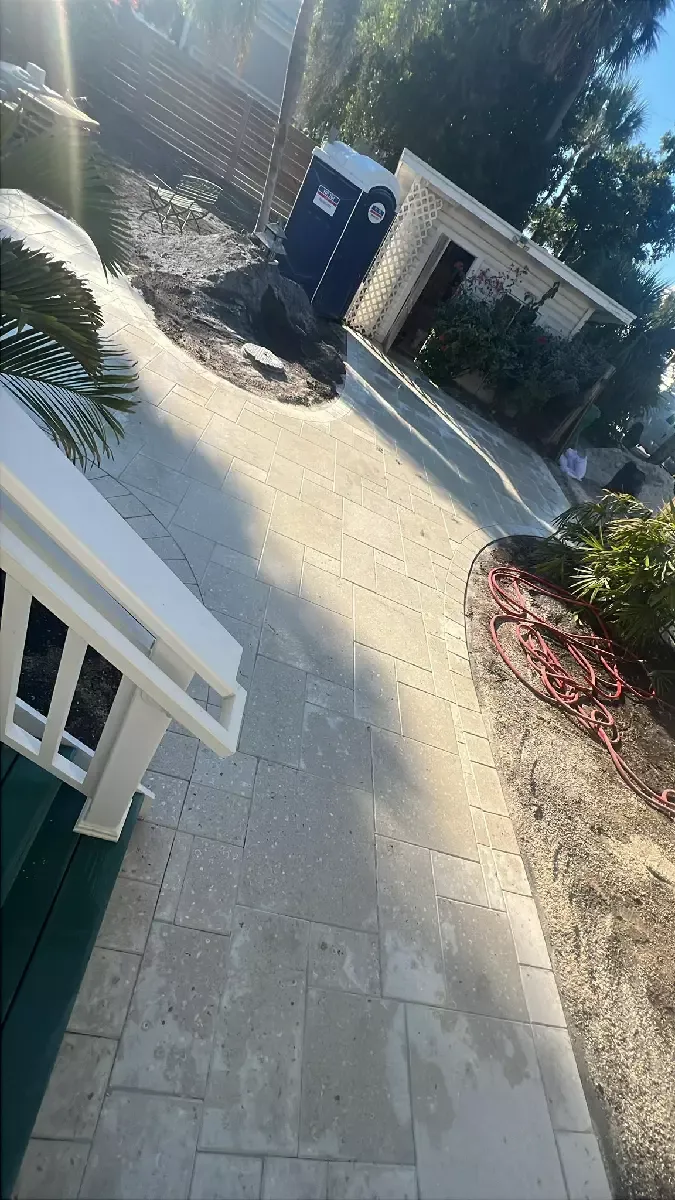
Patios and walkways
Foot traffic patterns, furniture placement, and runoff create stress points that settle unevenly. Targeted repairs relevel the low spots and restore smooth transitions between sections.
Sunken sections, drifting edges, and water standing where it used to drain. Most of that gets corrected without replacing your whole surface, as long as the cause is addressed instead of the symptom.
No cost, no obligation. You hear back within one business day.
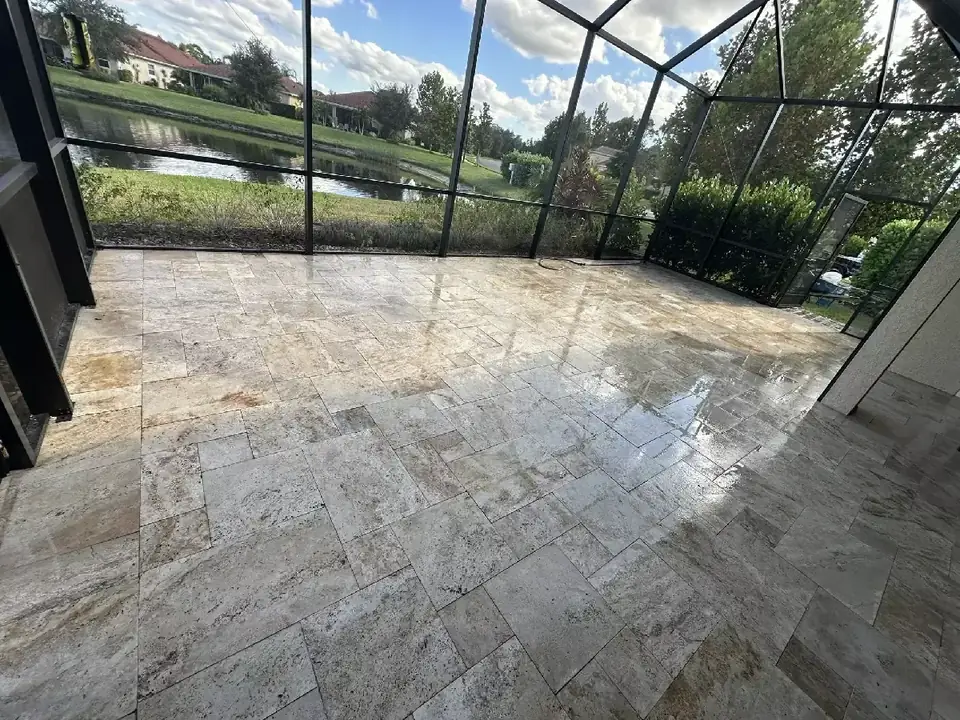
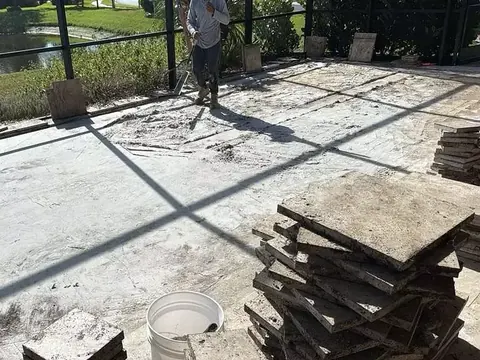
A Venice lanai floor, lifted and reset. The pavers came up and were stacked while the crew worked the base underneath, then the same floor went back down.
Settling, movement, and standing water all start small. Catching them early keeps your repair small.
If you are noticing uneven areas or drainage issues, an on-site repair evaluation is the first step toward keeping the problem from spreading into the sections that are still sound.
Describe what you are seeing. You hear back within one business day to set up a time to look at the site.
Google reviews from customers who had repair and releveling work done, shown as written.
★★★★★Just had my pavers re-leveled. These are the after pictures. It is like the day the pool was put in. The price was fair the guys were on time and professional. I will definitely be a repeat customer!
★★★★★The crew from BC Pavers came out and did a great job on my pool deck repairing the areas that needed it. Casey was able to work me into the schedule right away. 👍🙌 Thanks again, Michael.
Foot traffic patterns, furniture placement, and runoff create stress points that settle unevenly. Targeted repairs relevel the low spots and restore smooth transitions between sections.
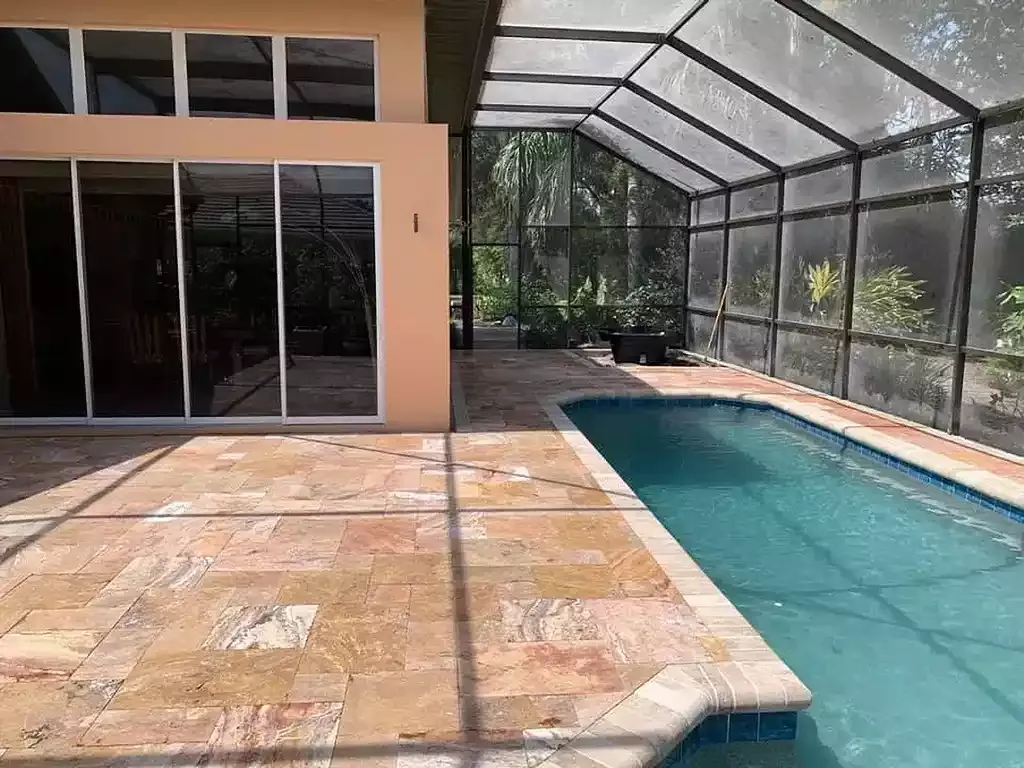
Movement shows up most near pool edges, drains, and equipment pads. Repairs correct the affected pavers along with any drainage issue behind them.
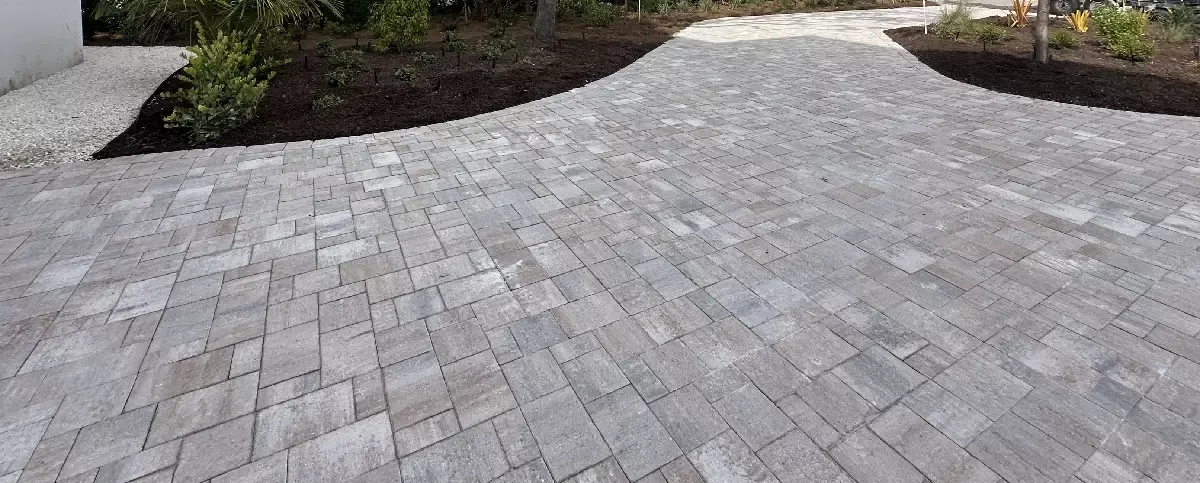
Settling shows up in high-traffic lanes and along edges where support eroded, and vehicle weight speeds it up. Fixing it early keeps your repair area small.
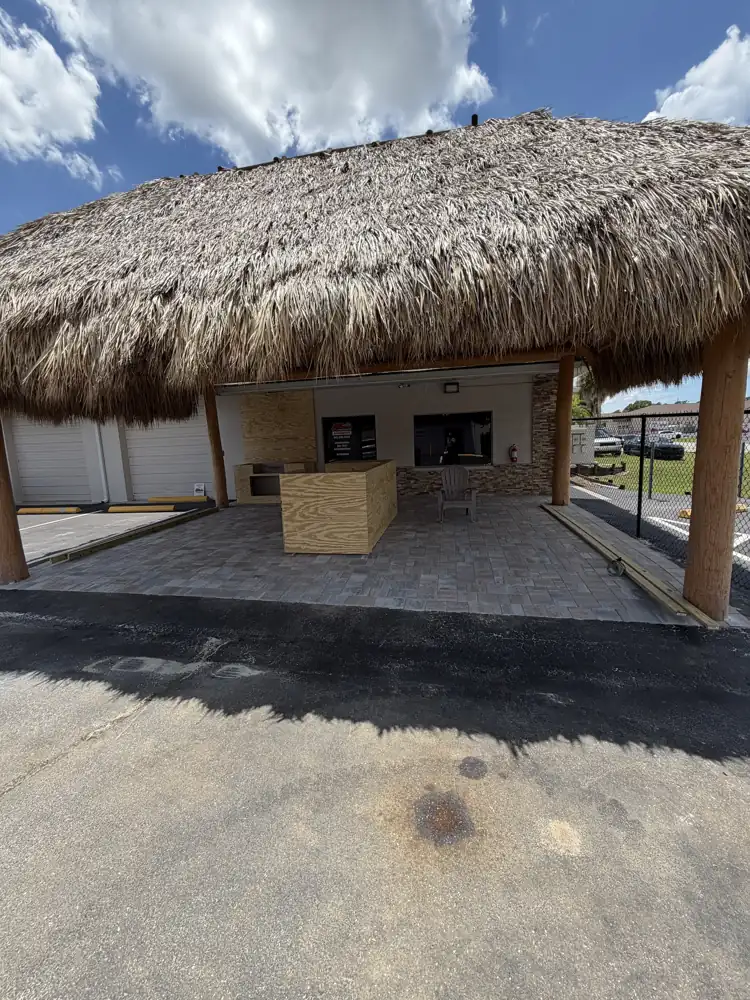
Heavier loads and constant use mean repairs have to account for ongoing traffic and get scheduled around business operations.
You are better off hearing that up front than paying for work that will not hold.
If the original work lacked proper preparation across the field, new paver installation is the more reliable long-term fix.
Fading, staining, and thin joints are maintenance issues. Start with paver sealing and cleaning.
Grading, berms, and swales move water away from the surface, and that work gets handled alongside repairs. See drainage and grading.
Repairs price out by what has to be corrected, not by square footage alone. These are the variables that move your number most:
The evaluation is free, and it is where you find out what caused the problem and what it takes to fix it.
We look at which pavers have to come up, whether the support underneath is stable, and whether drainage played a part. Soil conditions vary across coastal Venice, so the correction varies by property.
You see what the finished area will look like, including how any new pavers will blend with the weathered ones around them.
Access, staging, and the work sequence get set before anything is lifted.
Affected pavers are lifted and stacked, and the exposed support is checked for erosion, voids, or loose compaction.
Settled or washed-out support is rebuilt with compacted base sand, and grading is adjusted where water caused the problem.
Sound original pavers go back down, any replacements are the closest available match, and everything is set level with the surrounding field.
Closures and partial units are cut so the repaired section reads as part of the original surface.
A failed or shifted edge restraint is reset or replaced so the field has a sound border.
Masonry sand is swept into the joints to lock pavers in place while allowing future repairs.
We confirm the pavers are level, joints are filled, and water drains as intended, then leave the site clean.
Usually, yes. Most damage affects specific sections rather than the whole installation. Individual pavers come up and go back down, and localized support problems get corrected without disturbing the rest of the surface. When the majority of the field is still sound, repair costs far less than replacement.
A small section on stable ground can be done in a few hours. Larger repairs, or ones that need the support rebuilt, run one to two days. Extent of damage, site conditions, and weather all move the timeline.
Pavers sink when the material supporting them erodes or settles. Water getting underneath, support that was not built for the load, an edge that let go, or a soft spot below the surface are the usual causes. Our breakdown of why pavers sink in Venice and Sarasota County covers all four and what each one means for the repair.
When damage is localized and the rest of the installation is sound, repair is significantly less expensive. If the original work lacked proper preparation across the whole field, new paver installation is often the better long-term answer, and we will tell you which situation you are in.
Most repairs reuse your original pavers, so color and pattern carry through. Where a unit is cracked or broken, an exact match on an older surface is not always available, because color fades and product lines get discontinued. New pavers get blended through the repair area so the difference is far less noticeable than a single patch.
B&C Pavers installations carry a 2-year warranty covering settling and structural issues, and if a warranty repair is completed, the warranty period resets. For a repair to an existing surface, the coverage that applies is the coverage in your written agreement, so ask about it during the evaluation.
Standing water where it used to drain, or settling that keeps coming back in the same spot, points to drainage. If an area has been repaired before and the problem returned, the cause may still be there. The site evaluation sorts out which one you have, and drainage and grading is work we handle alongside the repair.
Repair work runs across both counties from the Venice shop. Pick your town for the neighborhoods covered and the repair questions that come up there:
A repair is assessed in person, because the cause decides the scope. Send what you are seeing and you hear back within one business day to set up the visit.