
Drainage, Grading, Berms and Swales
Where the water goes. Standing water, a lot that slopes the wrong way, and the grading that has to happen before any surface goes down.
Green year round with no mowing, no irrigation, and no bare patches where the dog runs. The turf is the part you see. What is underneath it is the part that decides whether you are still happy with it in year three.
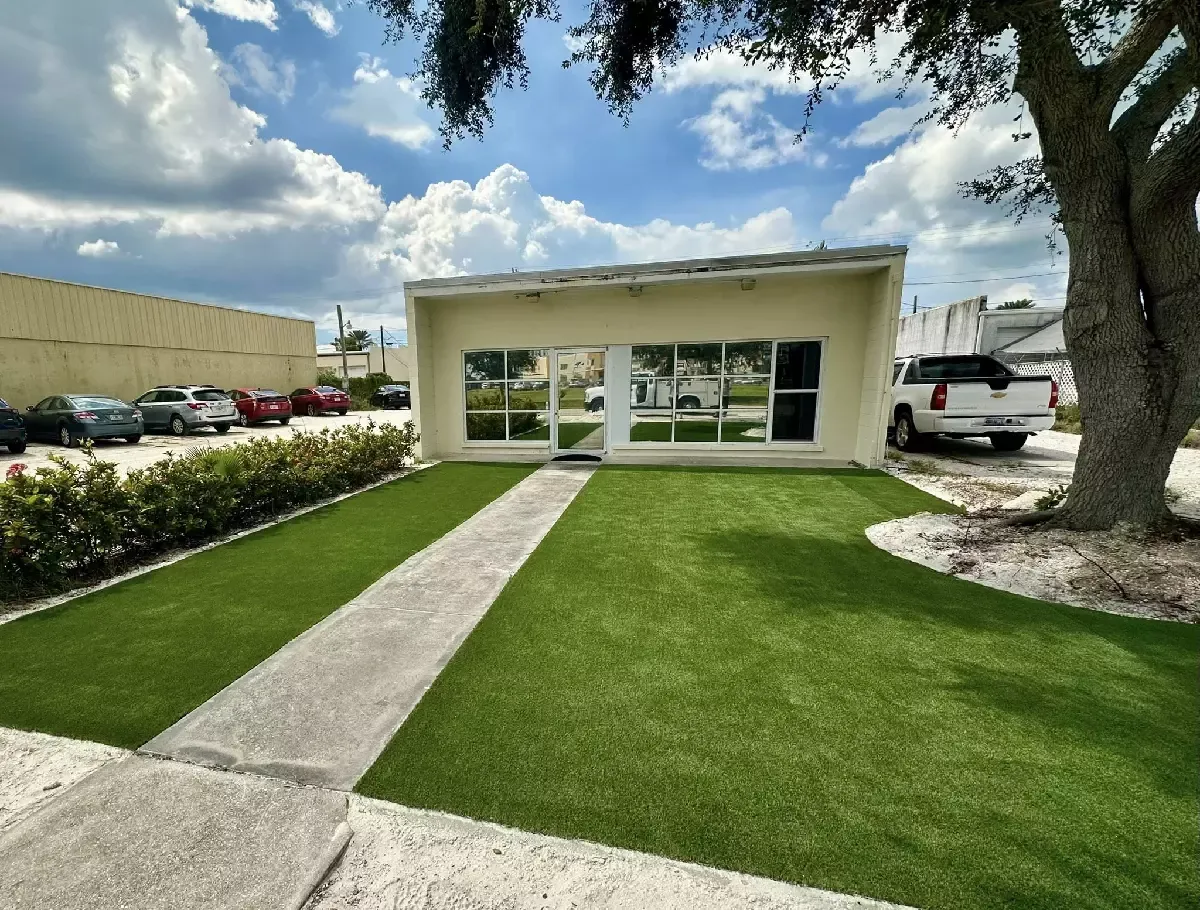
Almost every turf installation people are unhappy with fails the same way. It holds water, or it settles into a low spot, or the edges lift. None of those are the turf. They are what was or was not built underneath it.
Which is convenient, because base preparation and drainage are what a hardscape crew does all day. The same evaluation that decides how a paver field gets built decides how a turf area gets built, and it happens before anything is ordered.
Send your address, the rough area, and what it is for. Your on-site evaluation gets scheduled from there.
It runs warmer than grass in direct sun. On a shaded side yard that is irrelevant. On a west-facing area a dog uses at two in the afternoon it is worth thinking about, and it is better raised now than discovered in July.
It also is not maintenance free, whatever anyone tells you. Rinsing, clearing debris, and brushing traffic lanes keep it looking right, and frequency varies by use, exposure, and environment. What you are actually buying is the end of mowing, watering, and reseeding.
And it will not fix a drainage problem. If an area holds water today, that gets solved first. Laying turf over standing water just hides it for a season. Our drainage and grading service handles that part.
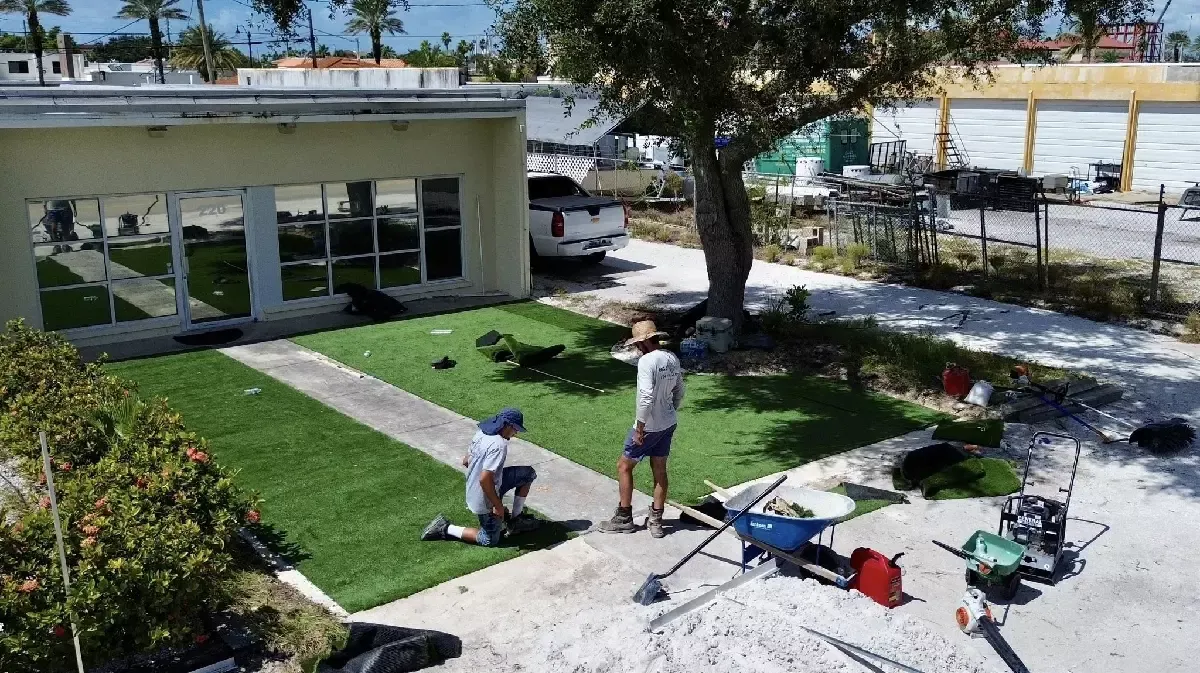
Book an evaluation and you get a straight read on whether turf suits the area, including when the answer is that it does not.
It runs warmer than natural grass in full sun. That matters most on a surface bare feet or dogs use through the middle of the day, and less on a front lawn people walk across. Shade, orientation, and how the area actually gets used are worth talking through before you commit.
It has to go somewhere, and that is decided by what is under the turf rather than the turf itself. The base has to move water off the area instead of holding it, which is the single most common reason a turf installation disappoints later.
It is a common reason people install it, because it does not turn to mud or wear into bare patches. Drainage matters more here than anywhere, and rinsing is part of normal ownership. Frequency varies by use, exposure, and environment.
Years of service is normal, with sun exposure and traffic level being the main variables. It is not permanent and nobody should tell you it is. What you are buying is the end of mowing, watering, and reseeding for a long stretch.
Yes, and that transition is worth doing well. A clean edge between a paver field and a turf area reads as designed. A ragged one is the first thing people notice. Doing both in the same project is how that edge stays tight.
Less, not none. Occasional rinsing, clearing leaves and debris, and brushing high traffic areas keep it looking right. Nobody should promise you a surface that needs nothing.
Deep shade where natural grass already struggles is fine. Large open areas on a tight budget are usually not, because the cost is front loaded. And if the area holds water today, that gets solved first or the turf inherits the problem.
A 2-year warranty covering settling and structural issues. If a warranty repair is completed, the warranty period resets. Turf product itself carries whatever the manufacturer provides, and you get that in writing.
Fixing where the water goes first, and the paver surfaces turf most often sits next to.
Where the water goes. Standing water, a lot that slopes the wrong way, and the grading that has to happen before any surface goes down.
Width, curves, and how a path meets the front door. The smallest projects, and the ones people look at most.
Sizing the space around real furniture, tying it to the house, and getting the threshold transition right so the patio does not sit a step off.
Send your address, the rough area, and whether it is for a lawn, a pet area, or a commercial entrance. Requests get a response within one business day.