
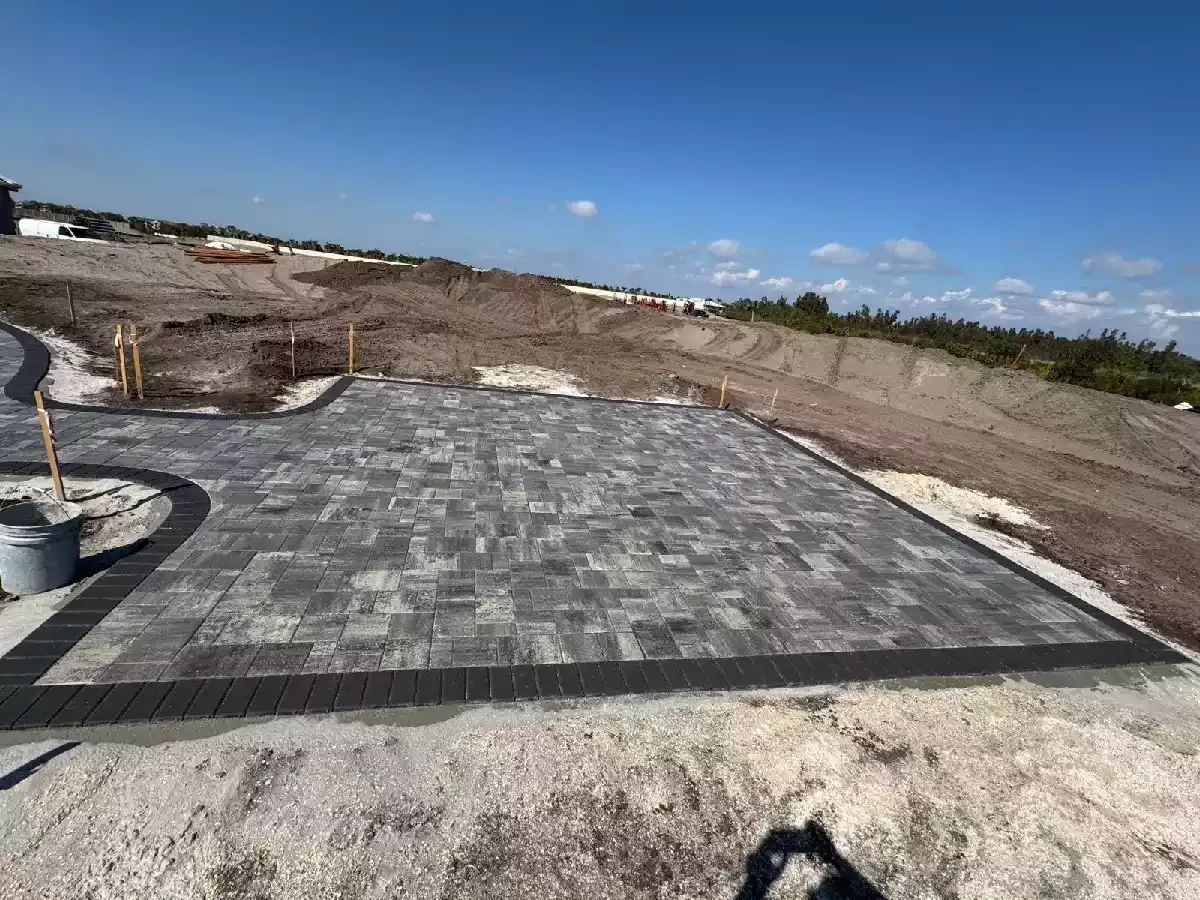
Commercial patio and gathering area, North Port
Walkways, patios, entrances, courtyards, curbing, and parking surfaces for property managers, developers, and association boards. Phased so your property stays usable while the work runs, because a closed entrance costs you more than the paving does.
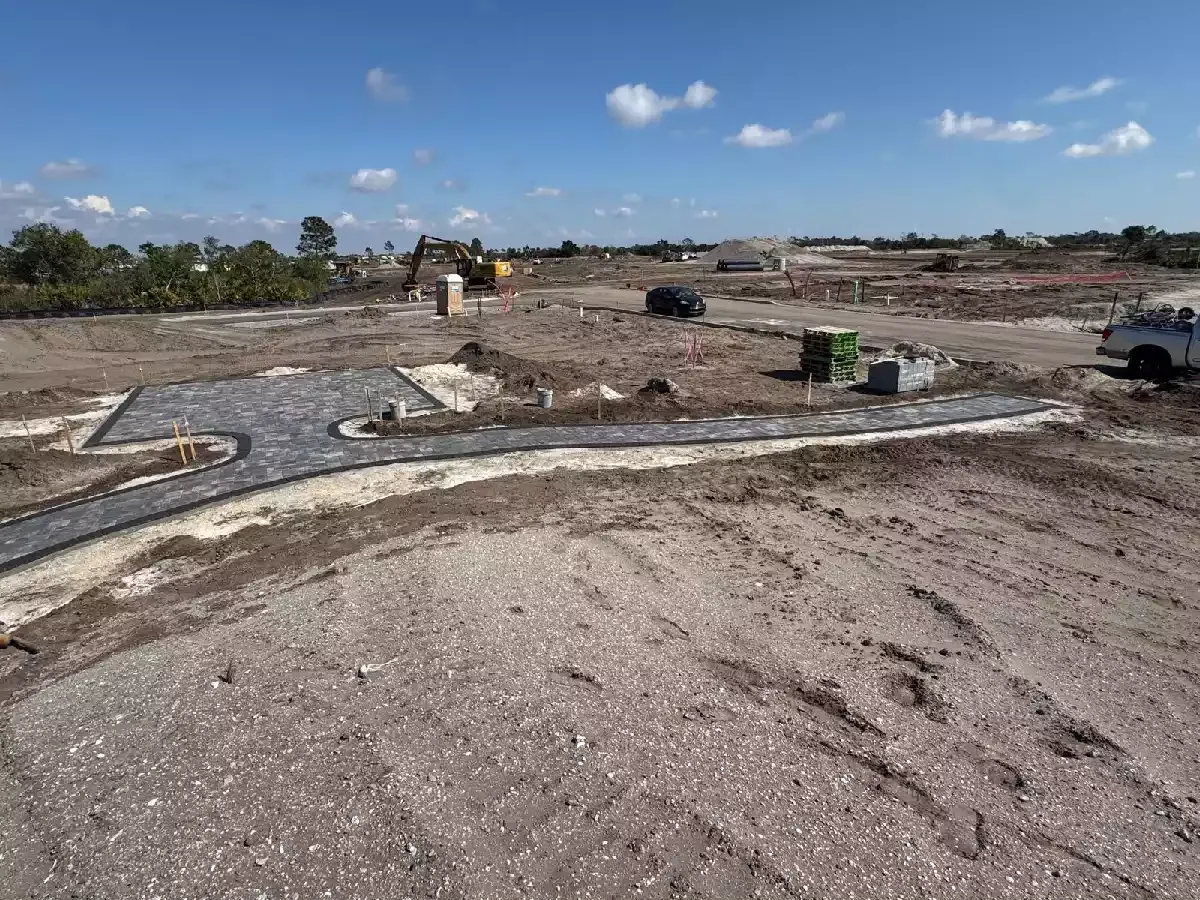
On a residential job the hard part is the surface. On a commercial property the hard part is doing it without shutting you down. Tenants still need the entrance, deliveries still arrive, and residents still walk the same path to the mailboxes.
Paver fields suit that better than poured concrete, because sections can be taken up and rebuilt in stages while the rest stays in service. Your access plan gets written into the proposal rather than improvised in week two.
Send the property address, approximate area, and any access constraints. Site walks are scheduled from there.
On a commercial property a settled paver is not just a cosmetic problem. An uneven joint in a walkway is the kind of thing that ends up in an incident report, and it tends to get worse quietly until someone notices it the hard way.
The practical advantage of a paver surface here is speed of correction. Individual units get lifted, the base underneath corrected, and the same pavers reset, usually inside a single visit and without closing the area. Correcting the equivalent on poured concrete means saw cutting, demolition, a pour, and a cure.
If you manage multiple properties, walking them once and getting a written list of what needs attention now versus what can wait is usually a better use of a visit than pricing a single repair.
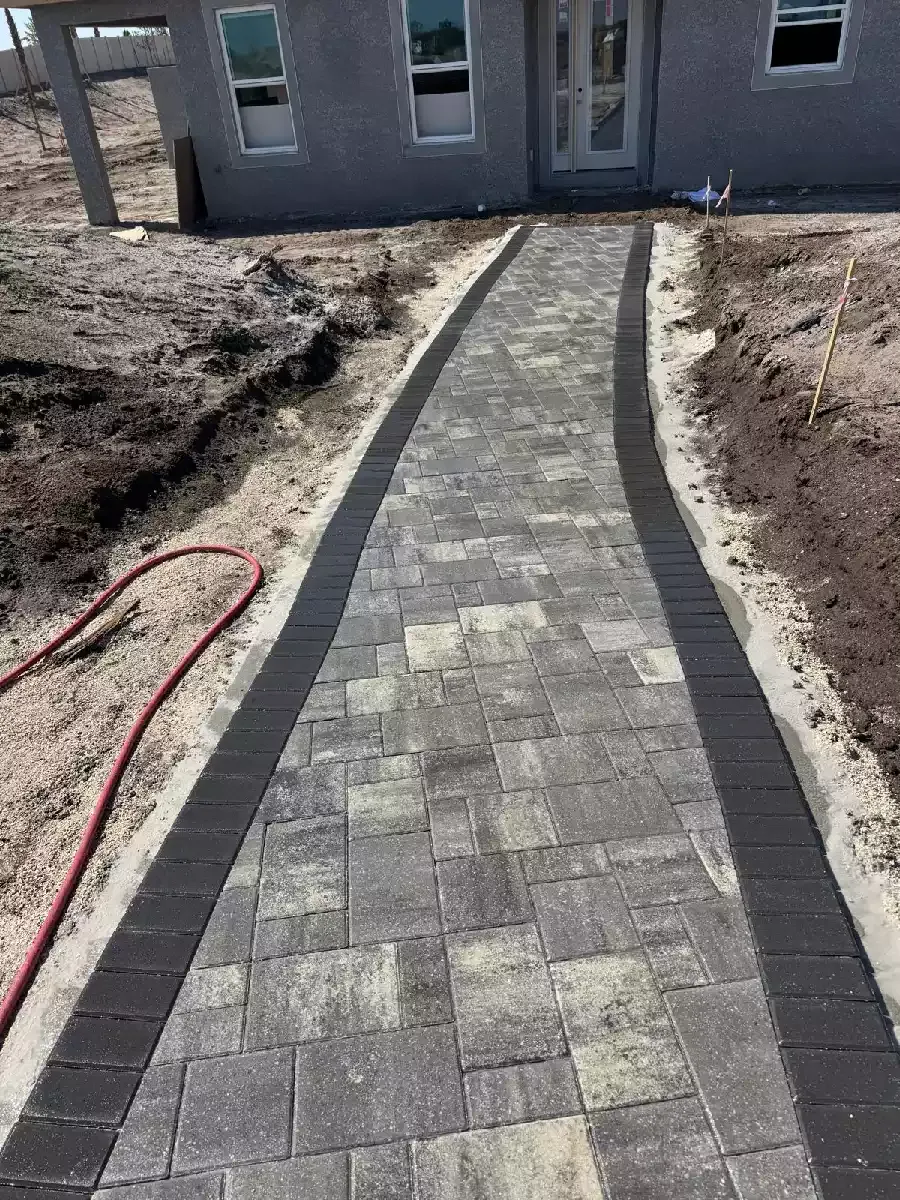
Developments, amenity areas, office entrances, and municipal surfaces.
Commercial patio and gathering area, North Port
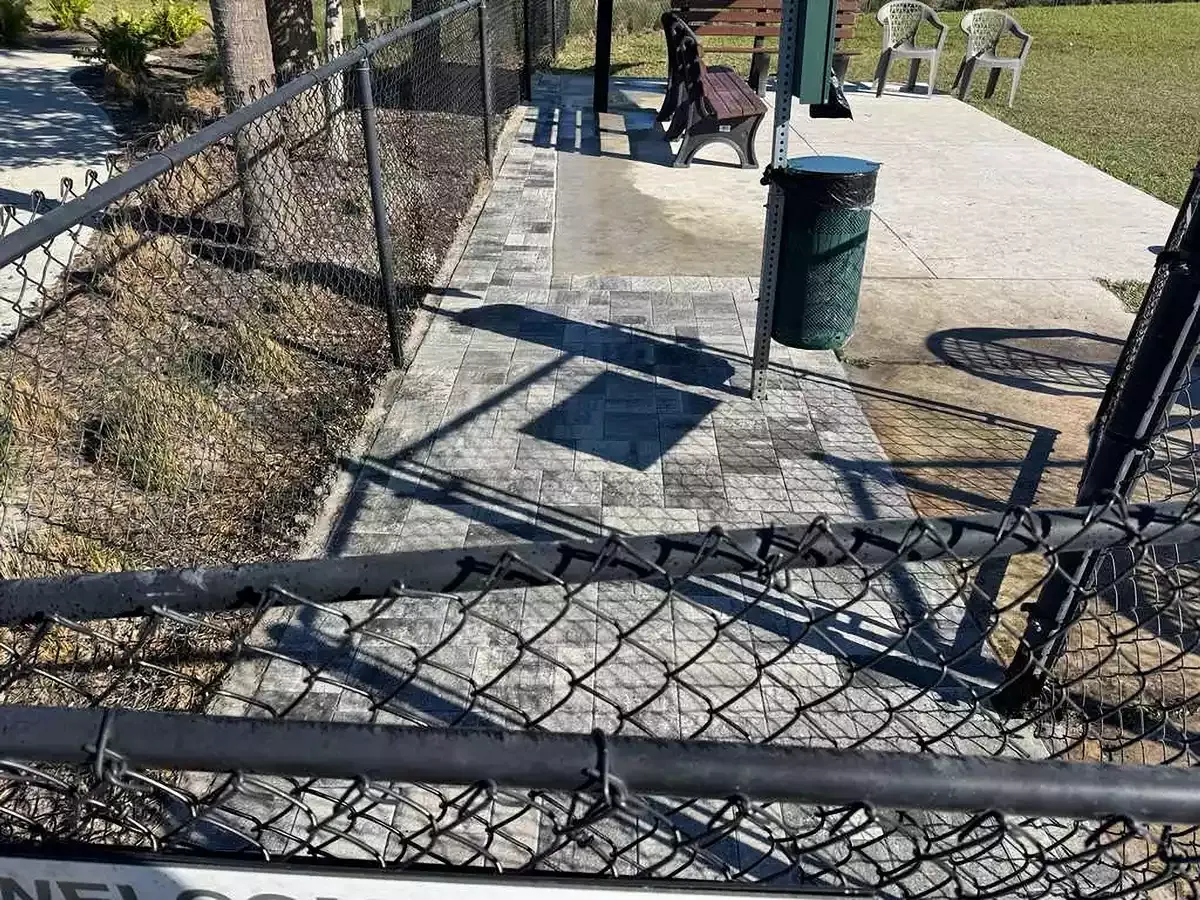
Amenity area at a commercial dog park, Osprey
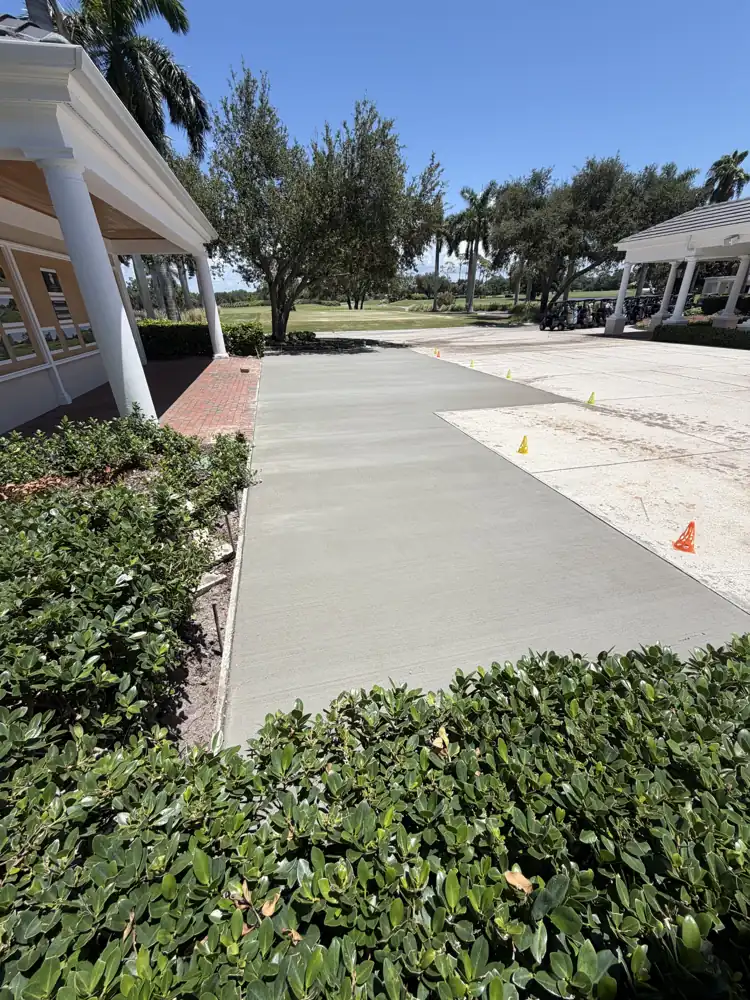
Concrete walkway repour at a private clubhouse, Osprey
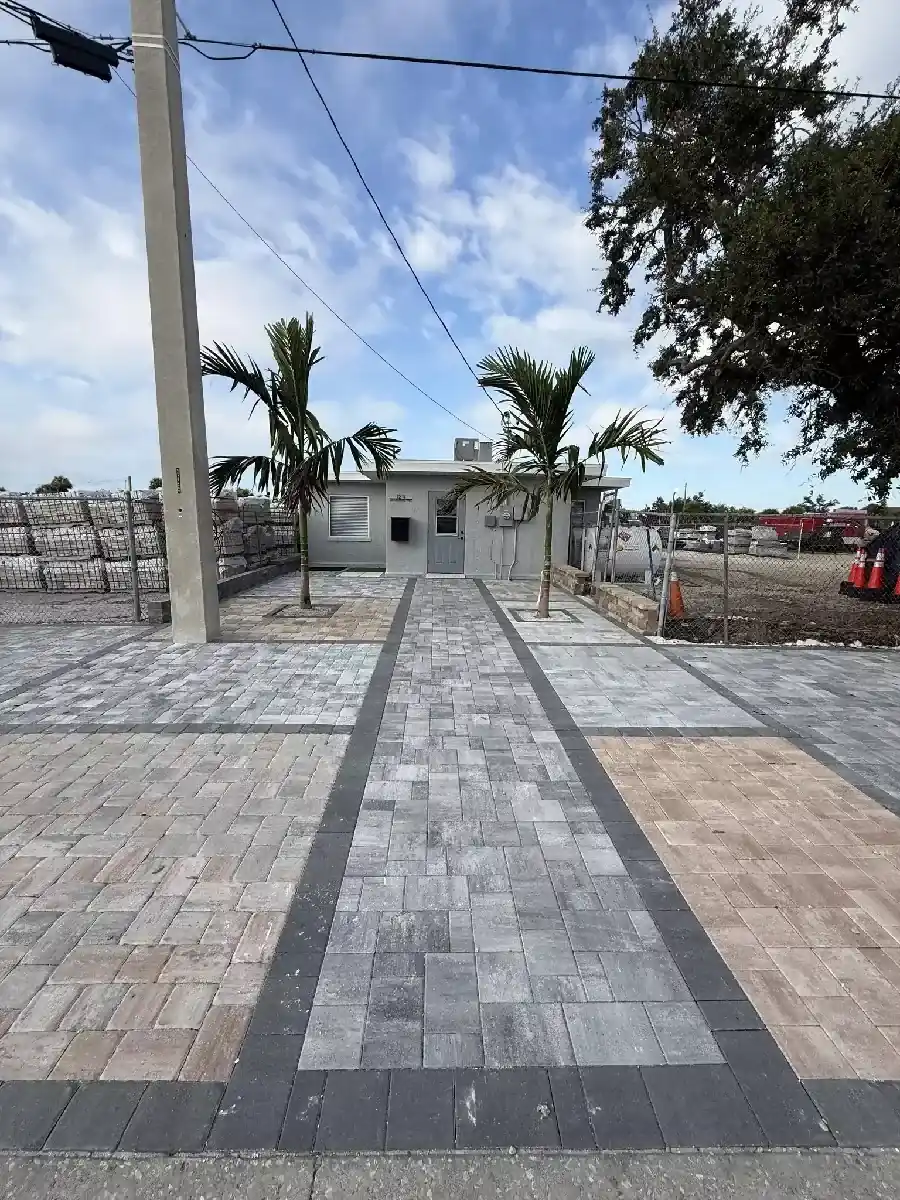
B&C Pavers storefront entrance, Venice
Commercial numbers move on different things than residential ones, and phasing is usually the biggest single factor.
A site walk settles all of it. Book a walk and you get a written scope with the phasing included rather than a square foot number that changes later.
Yes, and on an occupied property that is usually the deciding factor. Work gets phased so entrances, parking, and access routes stay usable, and noisy stages get scheduled where they cause the least disruption. That plan is agreed before the first truck arrives.
By sectioning it. A paver field can be taken up and rebuilt in stages, which is one of the practical advantages over pouring a slab that has to cure across its full width. You keep a route open throughout, and the phasing is part of the proposal rather than an afterthought.
The system is the same, but base depth is adjusted as needed for specific site conditions and load requirements. A parking surface carrying delivery vehicles gets evaluated differently than a courtyard that only takes foot traffic.
Usually. Where a discontinued product cannot be matched exactly, the practical approach is using the closest current match in a less visible zone and keeping the original units where people actually look. You see the comparison before anything is ordered.
Accessible access points and the transitions into them are part of the layout discussion. Grade, threshold heights, and how the paver field meets existing concrete all get worked out during the site evaluation rather than adjusted on site.
A walk of the property, a clear scope of what is in and out, and one point of contact for decisions. You get a written scope you can put in front of a board or an owners meeting, with the phasing and access plan included.
Both. Concrete curbing, footers, and sign bases are regular commercial work alongside the paver surfaces, and they often get done in the same mobilization rather than as a separate trip.
A 2-year warranty covering settling and structural issues. If a warranty repair is completed, the warranty period resets.
Commercial work rarely stops at one surface. These three cover the rest.
The base system, the process, and the warranty behind every surface we build. Start here if you want to know how the work is actually done.
Sunken sections, drifting edges, and standing water corrected at the cause, so you keep the surface you already paid for.
Cleaning, joint sand restoration, and sealer application that keeps color consistent and makes routine cleanup easier.
Send the property address and approximate area. You get a written scope covering phasing, access, and what stays open while the work runs.