
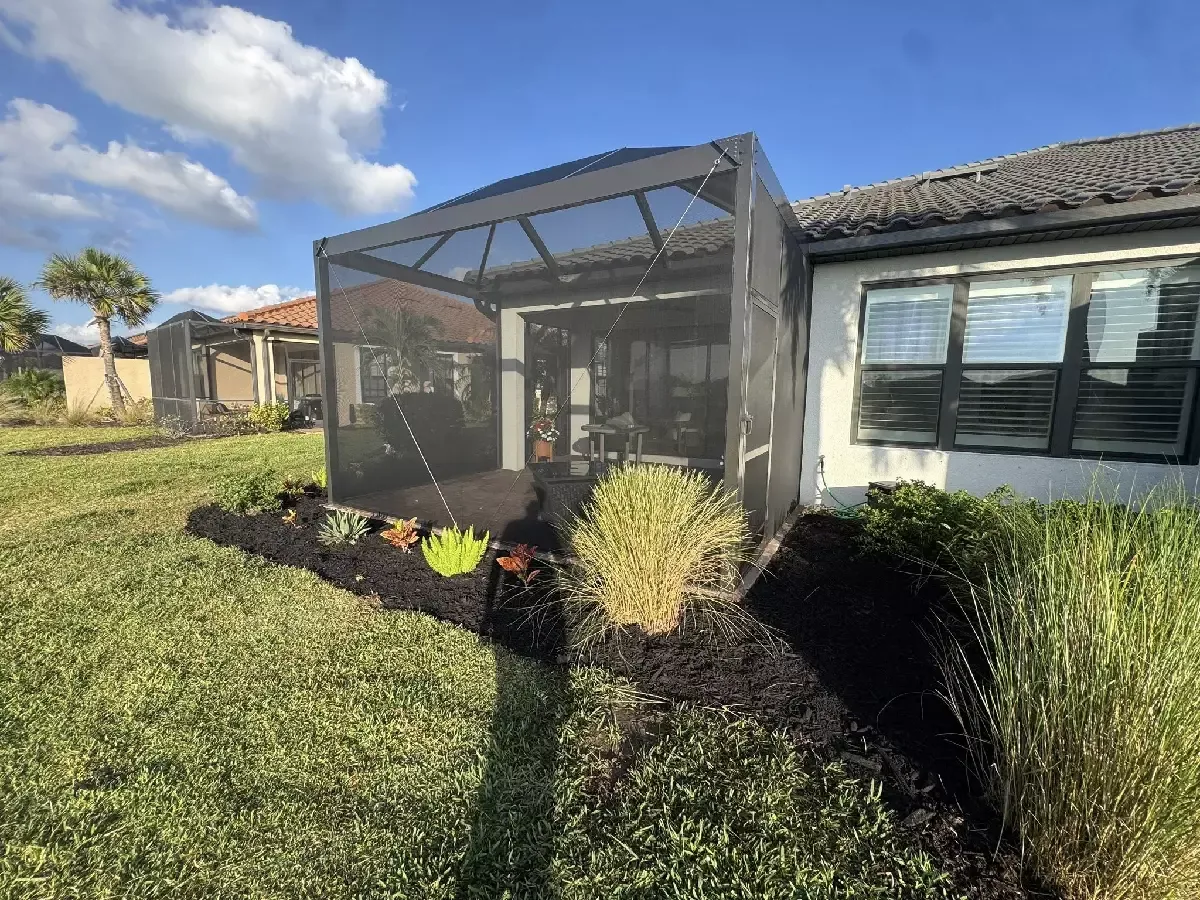
Extension built to match the interior floor, Bradenton
Extending the covered space, or replacing the floor inside a screened enclosure without taking the structure down. The visible test is the cut line where the pavers meet the track, and that is where this work is won or lost.
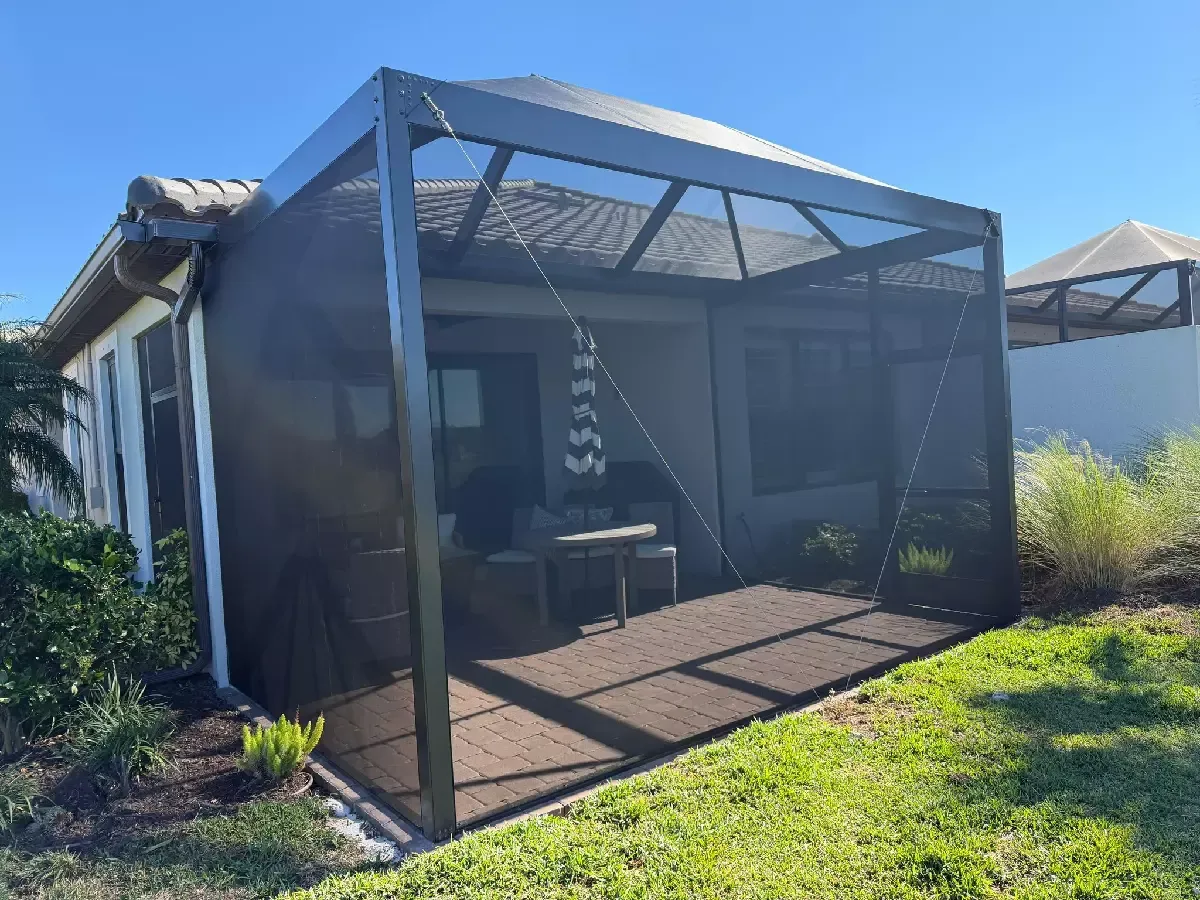
The square footage is often modest. The job is not. Everything has to come in and out through a screen door, equipment size is capped by the opening, and every paver around the perimeter meets an aluminum track that will show any cut that is off.
There is also the elevation problem. A lanai floor sits between your interior threshold, the original slab, and the track, and it has to land inside all three without creating a lip. That gets resolved on paper before anything is excavated.
Send your address, the enclosure size, and whether you are replacing the floor or extending it. Your evaluation gets scheduled from there.
Some projects involve extending or rebuilding the screen structure as well as the floor. That is a separate trade, and the order matters more than people expect. Run the paver work too early and a freshly compacted base gets worked over. Run it too late and the floor is being cut to a track that was set without reference to the field.
The practical answer is agreeing the sequence with the enclosure contractor at the planning stage, which is part of project management rather than something you should be coordinating.
If your enclosure is staying exactly as it is, none of that applies and the job is simpler. It just runs slower per square foot than an open patio because of access.
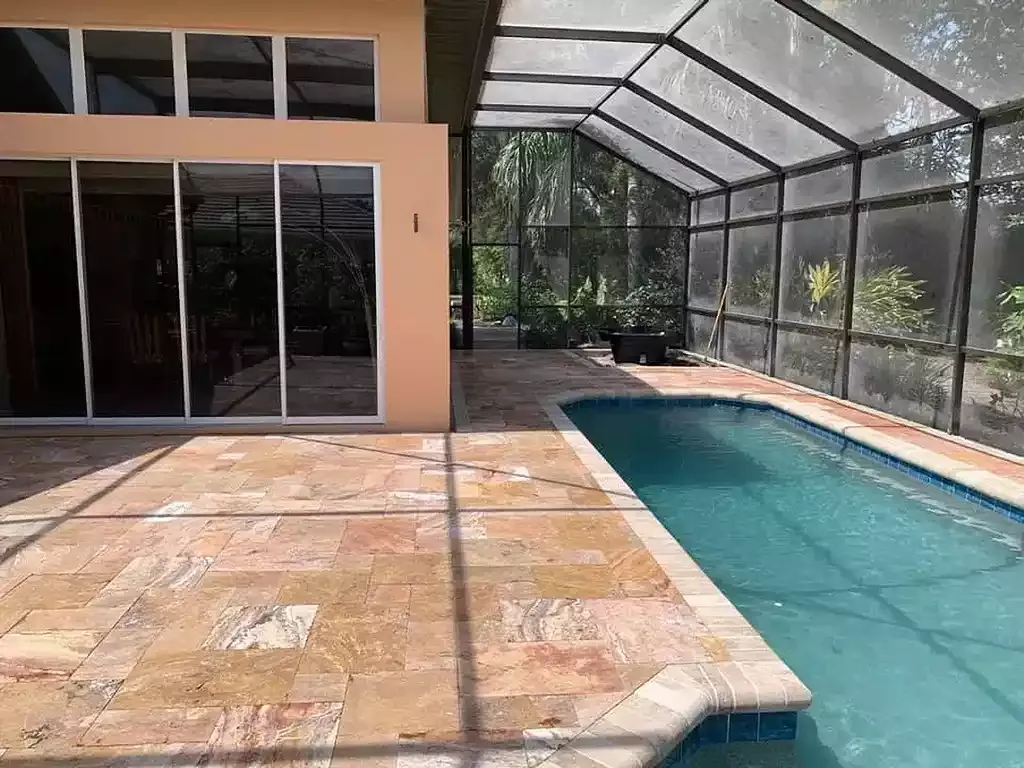
Extension built to match the interior floor, Bradenton
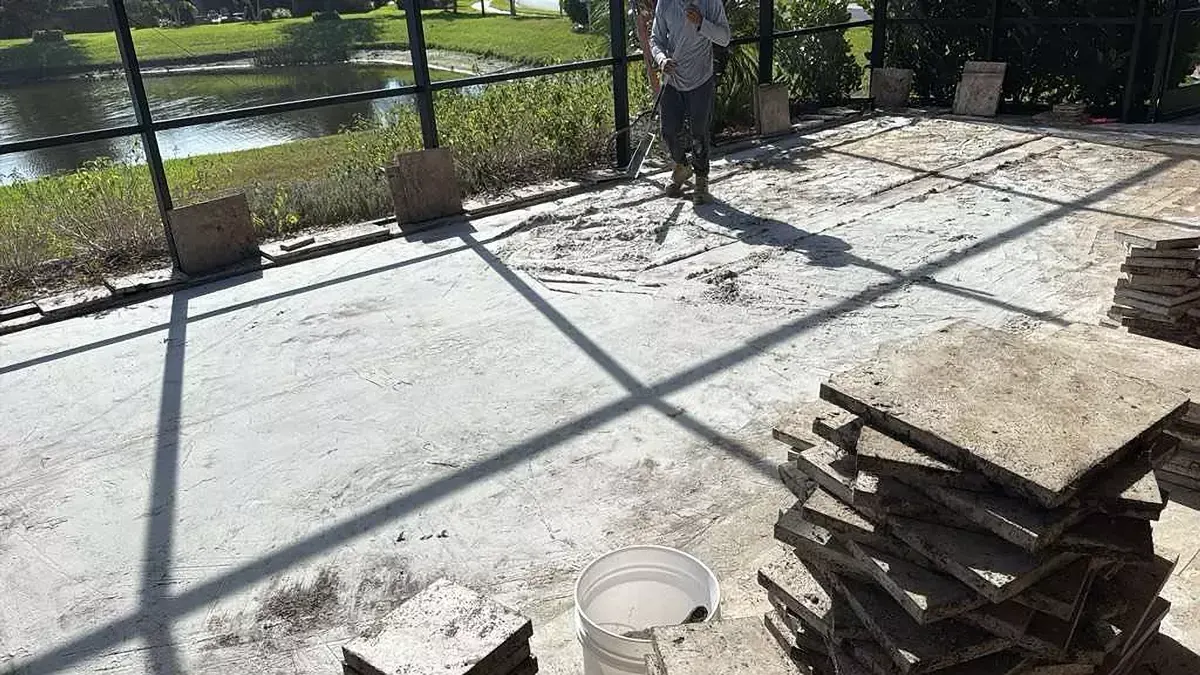
A lanai floor lifted for correction, Venice
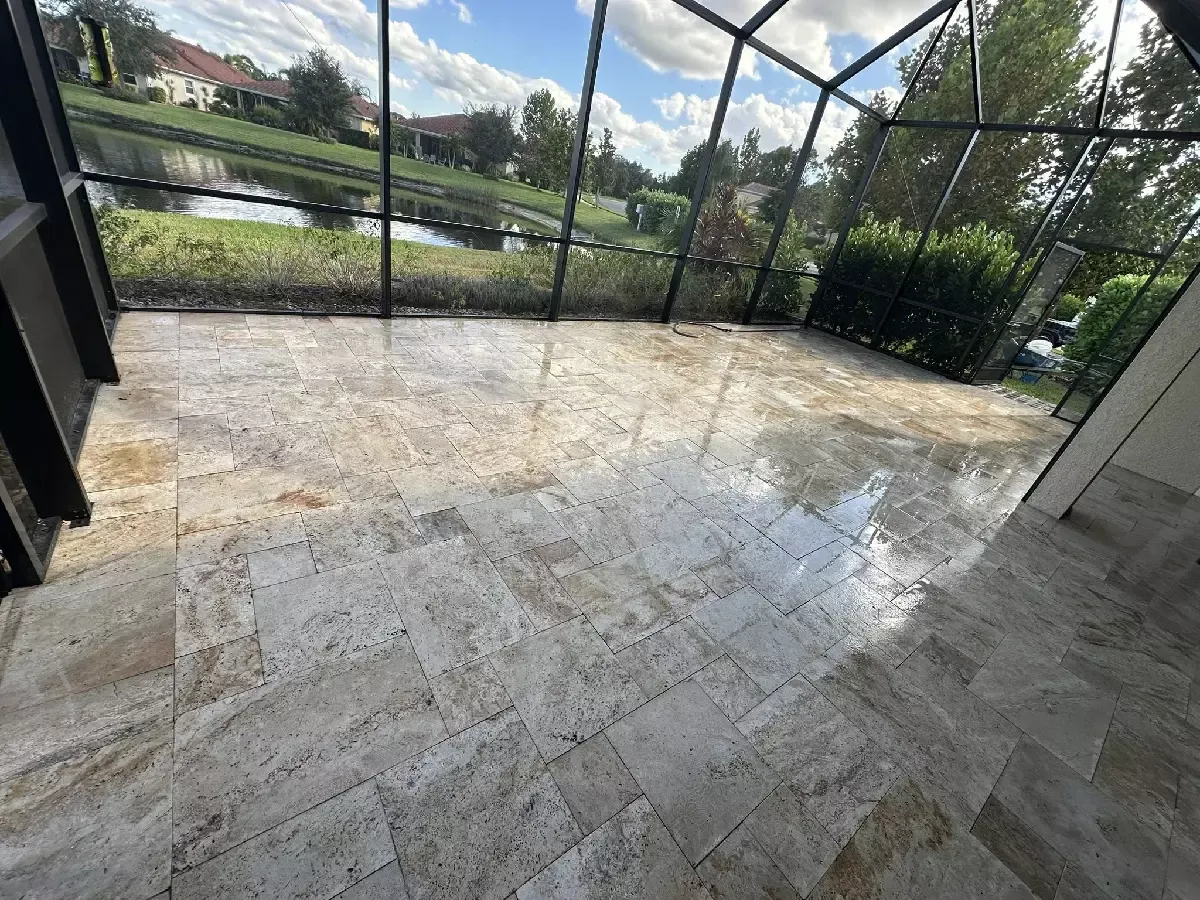
The same floor after lifting and resetting, Venice
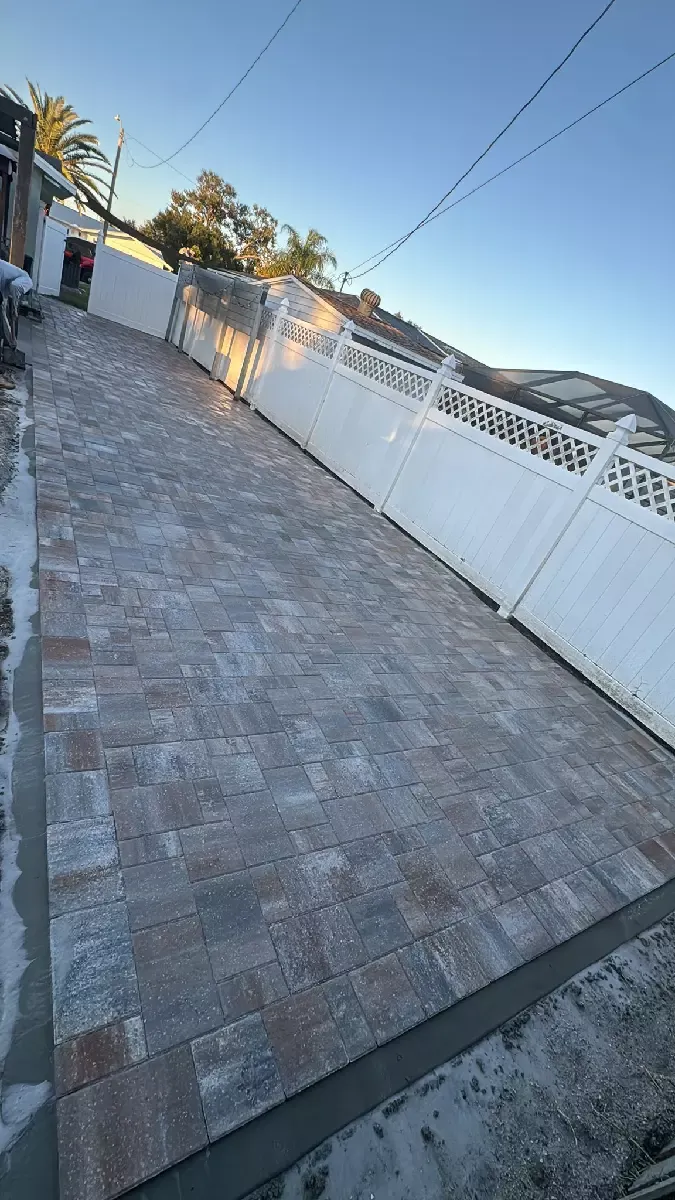
Covered surface continued out to the open yard, Venice
Book an evaluation and the elevation question gets settled with a level on your actual threshold rather than an assumption.
No. We build the paver surface, the extension slab area, and the transitions. The screen structure itself is a separate trade. Where an enclosure is being extended too, the paver work is sequenced with that contractor so the floor is not fighting the frame.
Usually yes, and that is most of these jobs. Working through an existing enclosure limits access and equipment size, so material comes in smaller loads and the sequence takes longer than the same square footage in an open yard. It is a scheduling difference more than a technical one.
That edge is the whole job visually. Every unit along the track is a cut, and the accuracy of those cuts is what separates a lanai floor that looks built in from one that looks laid over. It is the reason enclosure work costs more per square foot than an open patio.
Yes, and it is a common request. The extension is built to the same base system as the interior floor so the two behave as one surface, and the transition where the old edge sat gets planned rather than left as a visible seam.
It should not. Finished elevation is worked out against your threshold, the existing slab, and the enclosure track before excavation, because a lanai floor that ends up proud of the door is a problem you live with daily.
Not usually. Individual units get lifted, the base underneath corrected, and the same pavers reset. Our paver repair and releveling service covers it, and a settled lanai corner is one of the more common calls we get.
A 2-year warranty covering settling and structural issues. If a warranty repair is completed, the warranty period resets.
The deck outside the enclosure, the open version of the same surface, and what to do about a floor that has already settled.
Bare feet, constant moisture, and full sun. Surface texture, color and heat, coping, and drainage away from the house.
Sizing the space around real furniture, tying it to the house, and getting the threshold transition right so the patio does not sit a step off.
Sunken sections, drifting edges, and standing water corrected at the cause, so you keep the surface you already paid for.
Send your address, the enclosure size, and whether you are replacing the floor or extending it. Requests get a response within one business day.