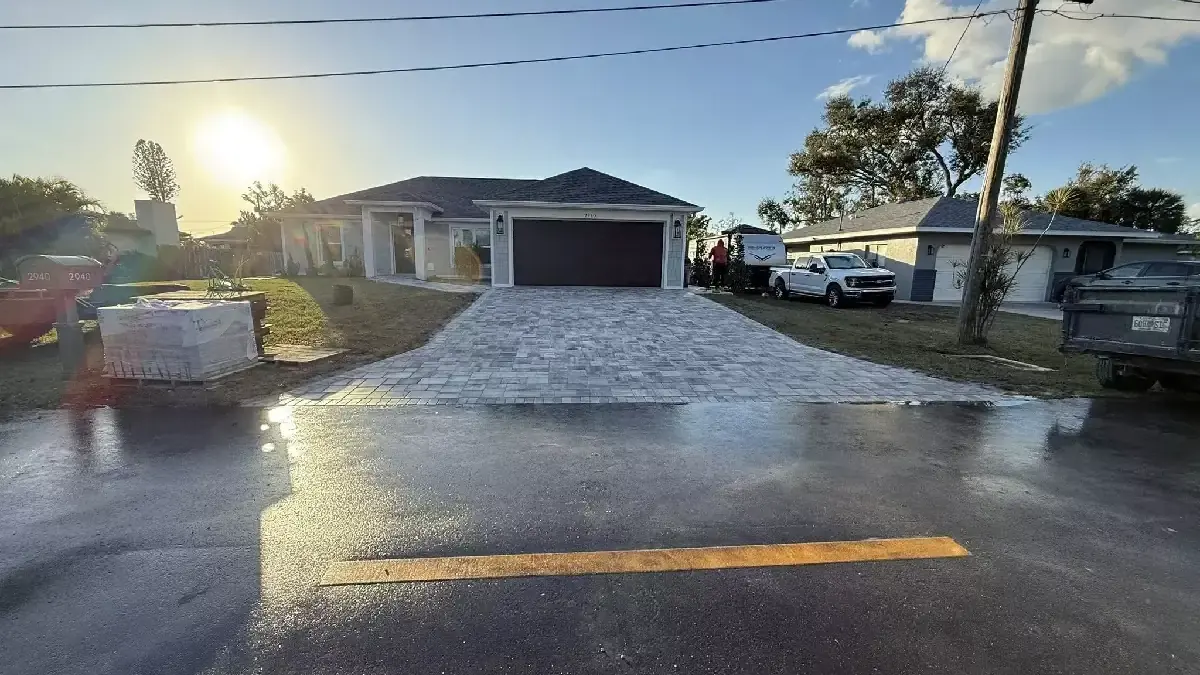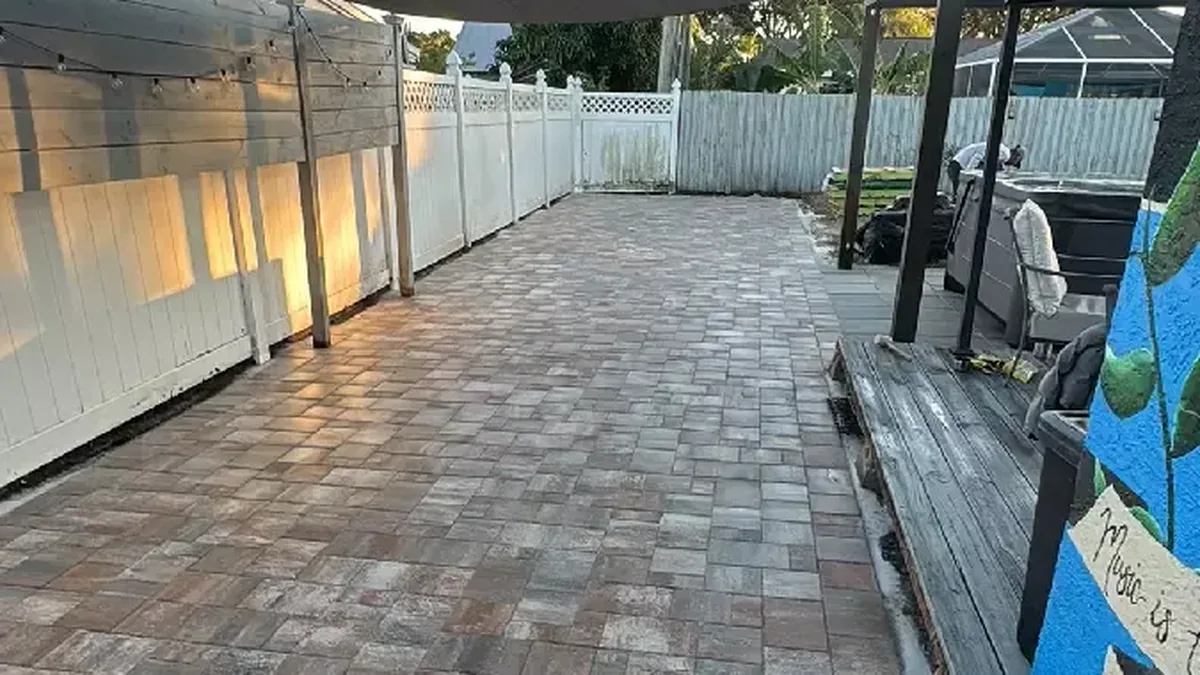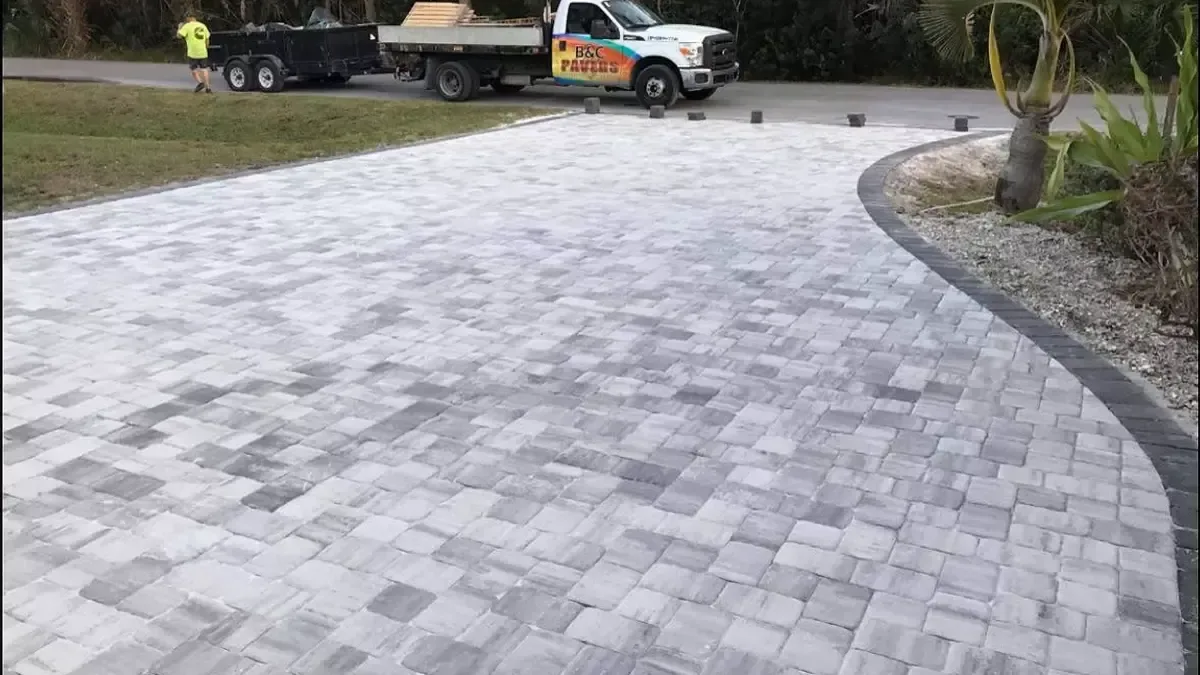
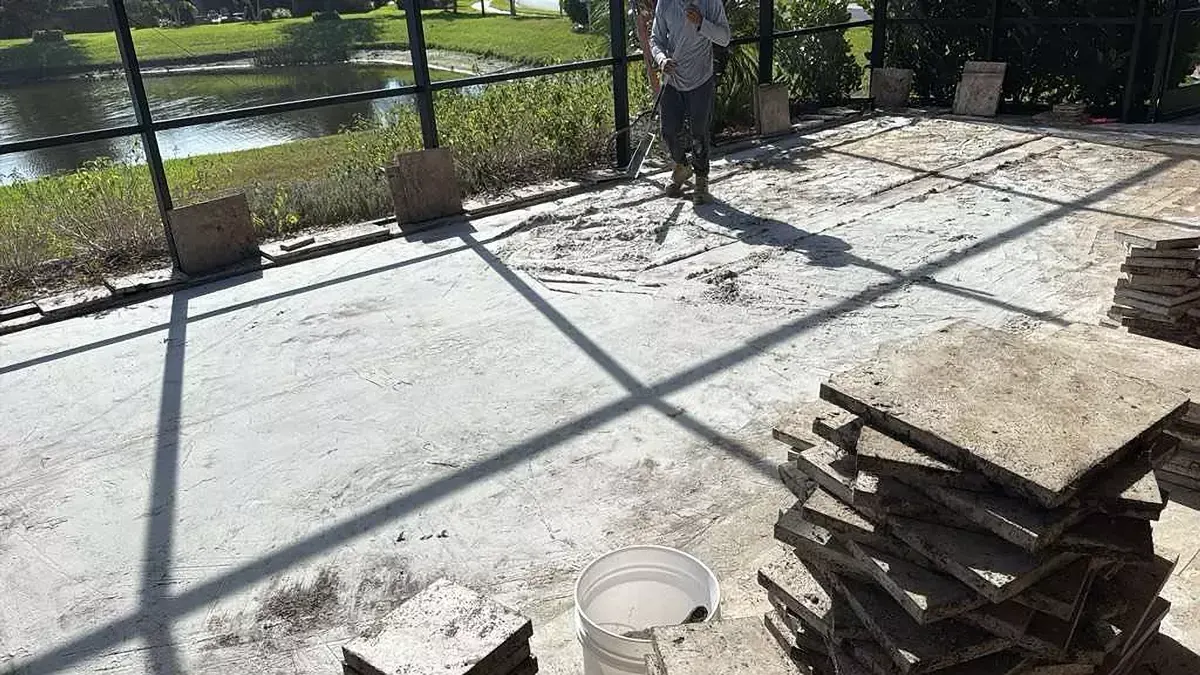
Pavers sink because something under them moved. The pavers themselves are rarely the problem. When a settled area gets opened up in Venice or anywhere across Sarasota County, it comes down to one of four things: water got underneath and carried material with it, the support was not built for what the surface actually carries, the edge let go, or there was already a soft spot down there before the first paver was laid.
Knowing which one you are looking at changes what the fix costs and how long it holds. It also tells you a lot about the contractor you are about to hire.
Water Underneath Is the Most Common Cause
Water running across the surface is fine. Water that gets underneath and keeps taking the same path is the one that causes trouble. A downspout emptying onto one corner, a grade that pitches back toward the house instead of away from it, or a pool deck draining to the low side will move fine material out from under the surface a little at a time.
That leaves a void. The pavers hold their shape until they do not, and then a section drops. Nothing on the surface warns you first, which is why a low spot seems to appear overnight when it has actually been forming for a year or two.
If joint sand keeps disappearing along one particular line, that is usually water telling you where it goes.
The Support Was Not Built for What the Surface Carries
A walkway people stroll across and a driveway a work truck parks on are not the same job, even when they use the same paver. Our standard is a 4-inch total base system: 2 inches of compacted base sand under a 2-inch concrete paver. Base depth is adjusted as needed for specific site conditions, and how the surface gets used is part of that decision.
When a surface settles under wheel loads while the rest of it sits flat, depth is usually the answer. Worth asking about before a job starts rather than after, because correcting it later means opening the surface back up.
The Edge Gave Way First
Edge restraint holds the outside row in place. Without it, or with restraint that was never anchored properly, the perimeter pavers creep outward, the joints widen, and masonry sand works its way out. The field loses its lock and movement travels inward from there.
Settling that starts along a driveway edge, the outside of a patio, or the border of a pool deck points at the edge first. Check there before assuming everything underneath failed.
Something Under the Surface Was Already Soft
Old utility trench backfill, fill dirt from a previous project, an abandoned irrigation line, or voids left where a tree was removed all read as solid ground until weight sits on them. Site evaluation is where those get caught, and it is the step people skip when they are in a hurry.
Ground conditions genuinely differ across this service area. On Venice Island, deeper subgrade preparation is sometimes required, and finding that out with a shovel before the quote beats finding it out with a settled corner two years later. That is the whole reason every job starts by walking the property.
A Settled Area Does Not Mean Starting Over
This is the part homeowners are usually relieved to hear. A poured slab that cracks gives you a visible patch or a full tear-out. A settled paver surface gets taken apart and put back.
The affected pavers come up, the support underneath is corrected and recompacted, the same pavers go back down, and masonry sand is swept into the joints to lock them in place while allowing future repairs. If water caused it, the fix has to include where the water goes, otherwise the same spot settles again.
What to Ask Before You Hire Anyone
Five questions separate contractors who think about the ground from contractors who think about the pattern.
- How do you evaluate the site, and what are you looking for?
- What is going under this surface, at what depth, given how it will be used?
- How are the edges restrained?
- Where does water go once this surface is in?
- Can I see proof of insurance, and what does the warranty cover in writing?
On that last one, ours is a 2-year warranty covering settling and structural issues. If a warranty repair is completed, the warranty period resets. B&C Pavers is fully insured, and you are welcome to ask for the certificate before you sign anything.
A contractor who answers the first four in plain language has probably dug up enough settled work to take them seriously.
Planning work of your own? See paver repair and releveling in Venice, FL.